To Seal Using Induction or To Seal Using Heat Transfer?

A common question raised is: when do I apply a heat transfer machine and when do I use an induction sealing machine?

Traditionally, you had no option but to heat seal when your product have no cap or closure that could tighten onto the body of the container. With the advent or development of capless induction sealing, the requirement for a cap is no longer there.  This is why there is the questions, when do I use induction sealing and when do I use heat sealing?

Below are two Capless induction sealing videos:

Heat Sealing Explained

A physical constraint of heat sealing is the landing area where the sealing film will be applied and bond. Put simply, the landing area is the rim of the container and how wide that rim is. Where the rim of the container is less than 1/16th of an inch or about 1.6mm, induction sealing should be the preferred option. Heat sealing struggles with this thinner lip to seal onto.

You will notice on products like yogurt tabs, the sealing area has been turned up and may quiet wide often around a quarter of an inch or 45mm in width. This allows for a good area for the heat seal to apply.

And so we look the three areas: the cost of the material, the cost of the machinery, and the process – how easy it is to implement the machinery into your production.

Below is an example of a Turnkey Solution for Filling and Packing Creamed Honey Using Heat Sealing Technology.

Heat Sealing and Induction Sealing Material

The materials are broken up into foil line and just plastic film. Induction requires foil line, and therefore, is a more expensive material.  Even comparing foil line for heat seal, induction is generally a bit higher because it has more thickness to it for the induction process to work properly.

A foil within the sealing material, be it induction or heat seal, will provide much better oxygen and waste barrier properties. Because of the natural, thicker material in induction sealing, it’s also a material more likely to peel off cleanly in one piece compared to a heat seal foil.

Heat Sealing and Induction Sealing Price Comparison

In terms of machinery, both heat sealing and capless induction sealing have some similar properties. In the semi-automated machinery side of things, they both quite low cost and you can get equipment for under $10,000 USD.
For more automated where you need speed to 30 products and beyond, machinery becomes more expensive.  The machinery, in this case, requires cutting tools, to cut the material before placing it on the container’s sealing area. This represents a maintenance issue and also a cost issue. In both cases, equipment going for 30 products or more will cost at least $25,000 USD and often will go up to $80,000 USD.

Capless sealing could go beyond that and well into a $100,000 to $ 150,000 USD, when you are looking at 80 to 120 products per minute. Conventional induction sealing where the seal is placed into the cap prior to the cap being placed onto the product is much lower cost equipment. Each top induction equipment can start at around $1,500 USD. In line induction sealing usually ranges between $16,000 and $25,000 USD. Higher speed induction sealing where you might be looking at 150 products plus per minute can get up to about $40,000 to $45,000 USD.

Again, both in heat seal and capless induction sealing, you need to divide the products into a multiple lanes so that you can do the sealing at a reasonable rate of 30 plus to, say, a 120 products per minute. This adds to conveying costs and product movement costs and, indeed, the machinery costs. General advantage of induction sealing over heat seal are that the process can instantly, no time for waiting for the machinery to be ready. But with heat seal, you need to wait for the things to heat up and you need to watch the temperature has gone up to the right temperature before you proceeding into production. The safety side for the induction sealing is no direct heat so there is little chance for heat related injuries. No cutting tools to maintain for traditional induction sealing, while there are four capless induction sealing.

Material Ordering Volume

Regarding custom print on your material, lower volume are often easier to get with induction sealing material. By lower volumes, I am saying less than 500,000 pieces worth of material. For ease of use of equipment, for instant start up purposes, the sourcing of materials, I would put in order: convention sealing where the induction material with a seal placed into a cap prior to the induction sealing, then if that is not possible, capless induction sealing, and then finally, heat sealing.

Where the barrier properties are not that important, and cost is a consideration, it always is, you can save up to 1 to 2 cents if you go to heat seal. Just in the material side of things per product. The bigger the opening of the container, the bigger that saving will be. Typically heat seal for containers of 70mm or 3 inches approximately diameter can present significant material savings.

The SealerOn website shows both heat sealing and induction sealing with an emphasis on induction sealing.


Medium Sized Personal Care Manufacturer Seeking to Find a Supplier of Induction Seals

We have received an inquiry from a medium sized personal care manufacturer seeking to find a supplier of induction seals for HDPE bottles. They are looking to insert the seals with a machine or by hand if they have to.

The start up, their Induction Seals order volume is not that great and is geared for small orders of 5kpcs. They are catering on a client that placed their first order and expect large growth quickly. They are looking to purchase a machine that will get them by until their volume justifies a more automated cap liner inserter.

Our Response:

We understand the chicken and egg situation for purchasing equipment and materials in the rapid growth stage.

In order to assist them with their project we would need pictures of their bottles and caps.

Pictures should show:

  1. the bottle with its cap off from the side
  2. the bottle with its cap off from the top
  3. the bottle with its cap on from the side
  4. the bottle with its cap on from above
  5. cap from underneath (inside)
the bottle with its cap off from the side

the bottle with its cap off from the side

the bottle with its cap off from the top

the bottle with its cap off from the top

the bottle with its cap on from the side

the bottle with its cap on from the side

the bottle with its cap from above

the bottle with its cap from above

cap from underneath

Cap from Underneath

With these pictures we can assess the induction seal suitability and machinery requirement

Other information we need to know

  1. a) The Bottle Material (what kind of plastic or is it glass)
  2. b) Contents ; is it a product with Oils Wet/Dry/Cream

With these details we can determine the best sealing material to supply

Note: we also have equipment to assist with labeling in small volume and can work with you in both induction sealing and labeling equipment as you grow.

Labeling Machine Price Inquiries – How Much?

Nearly every day, we receive inquiries that we cater through the chat engines on our websites. Many inquiries come from start up businesses trying to figure out the best way to present their products on the market; and what labeling options are available to them.

Have you ever been responsible for labeling a product by hand? If yes, then you know all too well that there is nothing simple about it. You will be curious to know the price of automation and if this is something that can be achieved with the use of smaller machines for starters. With a seemingly endless number of labeling machines to choose from, picking the right labeler for your product can be overwhelming.

Perhaps the most anticipated question customers ask with every chat is “How much”.  How much is the price of our labeling machine? Ask yourself, Is this asking the right question?

A good labeling company will take the time to learn about your specific requirement, your packaging and product, production volume and budget in order to determine the best type of product labeler for your specific application. Let us determine if this is the right time for you to own a self adhesive labeling system.

ROI on Labeling Machine

Labeling Machine ROI Sample ComputationSample Computation Only

The above image shows an example calculation of the cost benefit for changing from the current method of labeling to the proposed Labeler Machine.  You may be hand applying, using a label dispenser, using a benchtop label applicator or using another troublesome or slow in-line labeling machine.

The people at LabelOn™ can assist with a computation to suit your circumstances. Most large companies are looking for an ROI of 4 years or under. Any ROI lower than a year is outstanding and indicates you are very late in making your decision to get a labeling machine.

Choosing the Right Label Applicator

Picking the right labeler for your product can be overwhelming with a seemingly endless number of labeling machines to choose from. The LabelOn™ range can help simplify this because is divided into 4 simple categories, each one representing a specific labeling range capacity.

LabelOn™ Bench-Top Hand Crank Round - Made in the USA

Note: For Android phones that cannot play the video,
Click Here to play the You Tube Version

How would you feel about your product on a shelf with skewed label? There are ways to ensure that this does not happen. Major decisions are made to ensure that the packaging quality is indicative of the product itself, because the saleability of your product often comes down to appeal on a shelf. No one wants to see their product hit the consumer market with an appearance that does not reflect their commitment to quality. So please, ask yourself once again, how much is it worth to you to have your own labeling machine?

Let’s chat. We can help you.

LinePatrolman™ Accurate Validation and Monitoring of the Induction Sealing Process

Process Validation for Induction Sealing

It is an all time recommendation to have process validation for induction sealing to safeguard the sealing performance due to many variables that could easily change the performance of an induction machine.

A slight change in the induction machine sealing power setting, product conveyor speed, guide rail settings, sealing head angle or sealing head height can all have significant influence on the amount of energy the induction seal will receive; resulting in failed seals.

Visual Inspections: Induction Sealing Process Validation

Even the most competent and capable operators on your production shifts have to rely on opening product to make visual inspections and perhaps a very good memory of how warm the cap should feel immediately after passing through the sealing head.

Manual validation is more anecdotal than value based “validation” of your induction sealing process and machine set-up. The LinePatrolman range provides you with that numerical and repeatable process validation measures. The measure is a calibrated reading to record the energy that would be transferred to products passing through the machine.

Some Things to Look for in a Good Seal:

  1. Correct Settings – An experienced operator would know to look for a concentric heat pattern in the foil; by holding the foil to a light source at the correct angle he would see a smaller circle where material has not been affected by heat. This means the seal has heated from the outside inwards in an even pattern; hence an even seal.
  2. Overheating – there are a number of factors to show if there has been overheating including – visual discolouration of one or more layers of the induction foil, bubbling or creasing, a flattening of the bottle neck, melting of a backing resealing foam (when present).
  3. Uneven heat sealing –The foil can look well sealed but an uneven heat seal can result in areas of the seal being too firmly “welded” or very lightly welded making the seal likely to fail with a little pressure on the side walls of the bottle/container.
Induction Sealing Process Animation

How to Improve Your Induction Sealing Process with the Patrolman™ range

Patrolman Line MasterIf you have doubts that you will always operators trained or experienced enough to cover what is required for a reliable visual process of validation for induction sealing, then there is the simple option of a LineMaster™ which has no more controls than a reset button.

This unit needs no programming and simply provides an integrated count of the energy seen by the testing cell passing down the same path as the products.

A reason that many need an induction sealing measurement is because the energy transferred by an induction SealMaster Processsealing machine to the foil of an induction seal within a cap is a time and position dependent process. The LinePatrolman™ range are unique process validation tools that will pick up variations in energy transfer in what may look like an identical set-up to the last time an induction machine was run. This tool takes way the guess work on what energy is being transferred and provided operator confidence that the machine is set to the best it can be set.

SealMaster Validation Tool for Induction Sealing

SealMaster™ Validation Tool for Induction Sealing Brochure

SealMaster Validation Tool for Induction Sealing Brochure

LineMaster™ Validation Tool for Induction Sealing Brochure

LineMaster Validation Tool for Induction Sealing Brochure

LabelOn™ Mini Series

LabelOn™ is introducing the newest addition to its line of labeling machines, the LabelOn™ Mini Series.

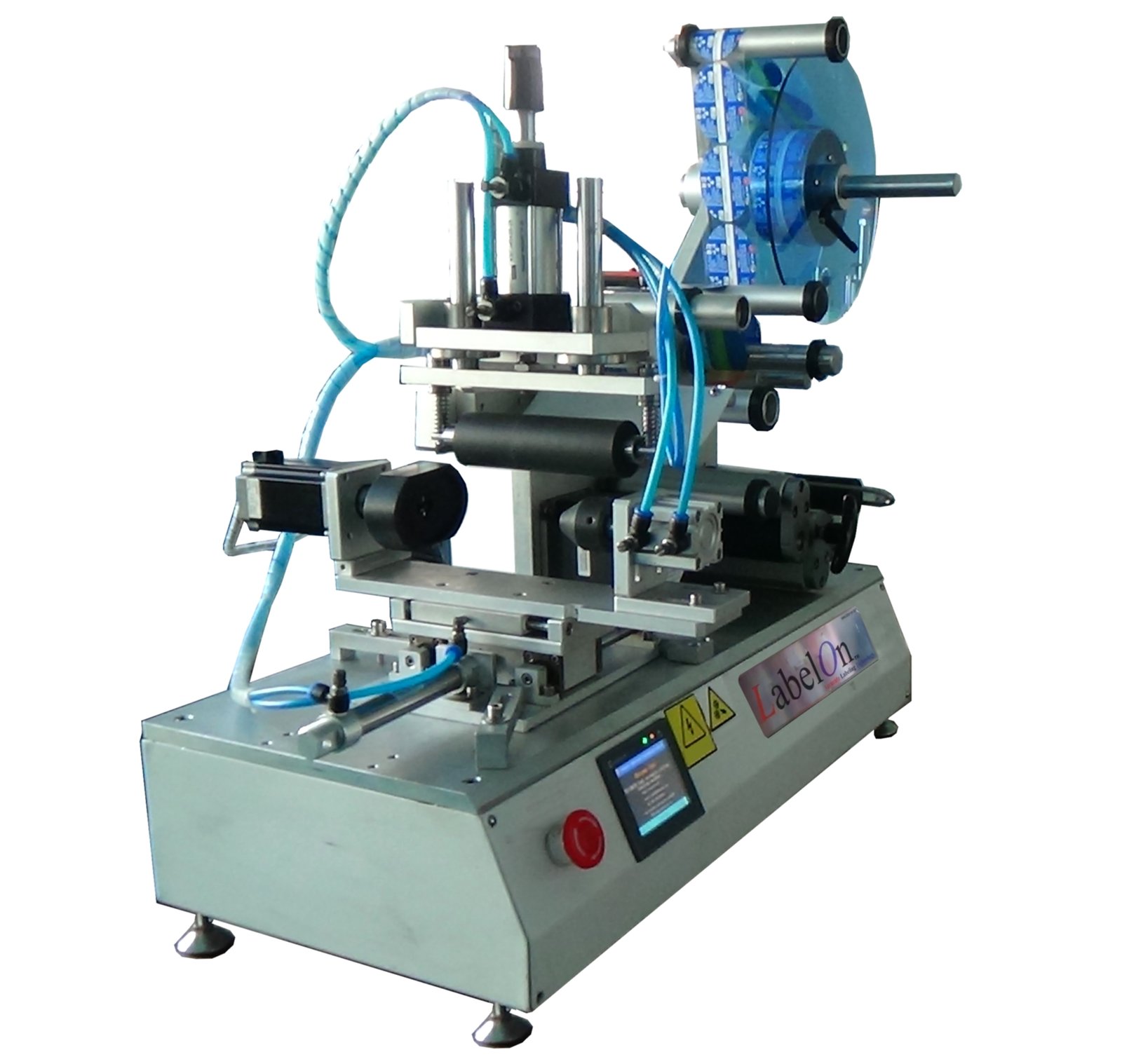
LabelOn™ Mini are Tabletop Labeling Machines with smaller footprints designed for smaller businesses or start up companies who understand the struggle of placing labels to their products by hand. They can be widely used in different size bottles designed for smaller production run.

The LabelOn™ Mini Tabletop Label Applicators do everything their more expensive counterpart machines do, but with the fraction of the cost. The demand for these smaller labeler machines is undeniable. Highly accurate, they will apply your labels quickly and efficiently which saves you valuable time and make a huge statement in the appearance of your finished product.

Top Labeler With or Without Feeders

Automated Standalone Top Labeler

Suitable for various flat products such as plastic boxes, DDR, note book, aluminum foil bags, etc. It can be connected to production line to increase production.

Labeling Machine Features:LabelOn Mini Round Top Labeler

  • Adjustable labeling height and angle.
  • Digital control panel controls labeling speed and labeling delay time.
  • Easy to set and read, user friendly Microprocessor and LED screen.
  • Automatic label sensor detection with built-in label stop position ,auto-adjustment
  • No adjustments needed: built-in conveyor automatically matches label speed.; with labeling spacer and counter.
  • Labeling accuracy ±1mm1/25th inch)

Labeler Machine Specifications:

  • Footprint size 950mm (37 inches) long x 580mm (23 inches) wide x 730mm (29 inches) tall
  • Label Roll 75mm (3 inch) core inner diameter; 300mm (12 inch) outer roll diameter
  • Power 110v 50/60Hz
  • Label head stepper motor, Labeling speed: 30~60 pcs / min (depends on containers and labels size)
  • High quality aluminum alloy and Stainless Steel construction.
Label Applicator Available Accessories :
  • Date coder
  • Transparent label sensor
Pouch Labeler or Bag Labeler
Lid Labeler

Mini Applicators

Benchtop Series

LabelOn™ Benchtop Machines

Benchtop Labeling Machine Series

LabelOn™ is pleased to add to its range, a machine that will provide relief to those struggling to hand label Oval or Flat and near Flat products.


LabelOn™ Benchtop Oval and Flat Labeling

Oval and Flat – Single and Double Sided Labeling

If you have requirements of 1000 pcs a week or more, the LabelOn™ Bechtop Flat and Oval 1 or 2 labels machine will pay for itself extremely quickly. It will also make your shelf presence look like you were using accurate packaging equipment 4 or 5 times more expensive than this unit.

We can even configure this machine (at point of manufacture) so that it achieves an astonishing feat – a single full wrap of an oval product!!

Flat and Near Flat Label Applicator
LabelOn Basic Oval Double Sided Better Pic
Labeling Machine Specifications:
Series: LabelOn™ Benchtop
Model: Flat and Oval One or Two Sides
Labelling accuracy: ±1.0mm
Typical Labelling speed: 8 to 15 Pieces / min
Product Height: 25mm to 250mm
Product Width: 25mm to 150mm
Product Thickness: 5mm to 125mm
Label Length: 12.5mm to 250mm
Label Height: 12.5mm to 150mm
Label Roll Core: ID Φ76 mm
Label Roll Diameter: OD Φ280mm
Machine Dimensions (L × W × H) 850mm×410mm×720mm
Power supply: 110/220V 50/60HZ
Total Power: 145W
Air Pressure (Mpa): 0.4 to 0.6Mpa


Oval and Flat Single and Double Sided
Full Wrap Oval